• • Clean Out Your Camera Backpack Before Your Next Shoot
Dump and Reload: Why Every Photographer Should Empty Their Camera Backpack Once a Year
Every photographer has experienced it. You grab your camera backpack before heading out for sunrise, sling it over your shoulder, and immediately wonder, “Why does this thing feel so heavy?” At first, you assume it’s simply the weight of professional camera equipment. After all, cameras, lenses, tripods, and filters aren’t exactly lightweight. But if you’re honest with yourself, the real culprit is usually something else entirely—years of accumulated gear that slowly found its way into your backpack and never came back out.
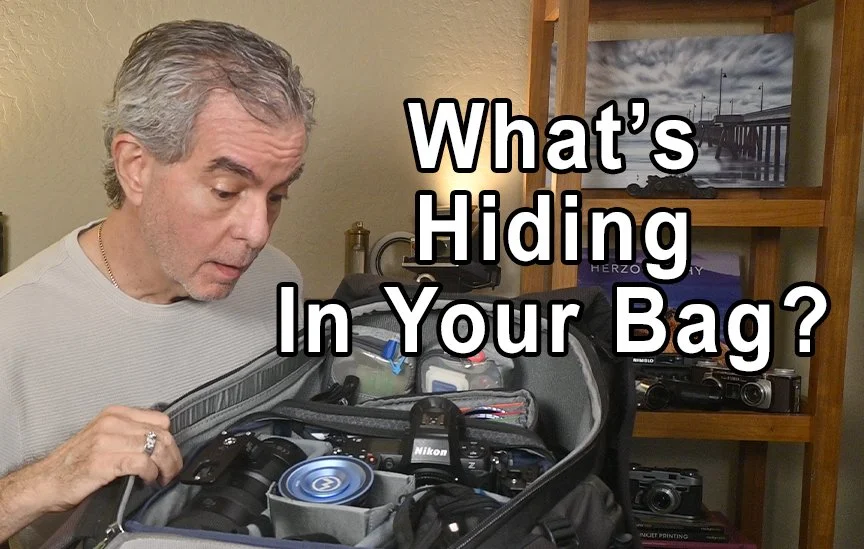
I have developed a habit that I believe every photographer should adopt. At least once a year, I completely empty my camera backpack. Everything comes out. Every filter, every battery, every memory card, every cable, every cleaning tool, every accessory hidden in the smallest pocket. It may not be the most exciting photography project you’ll undertake, but it is one of the most rewarding.
The first thing I notice is just how much unnecessary equipment I’ve been carrying. Like many photographers, I’ll pack something for a specific assignment—a specialty filter for a long exposure, an adapter for a unique lens, an extra charging cable, or a cleaning tool that seemed essential at the time. Once the project is over, those items often remain tucked away in the backpack, quietly adding weight without ever being used again.
One accessory doesn’t make much difference. Neither do two or three. But after months—or even years—those forgotten items add up. A few ounces here and there eventually become an extra pound or two on your back. If you’re hiking several miles to reach a scenic overlook or climbing a rocky trail before sunrise, every unnecessary pound becomes painfully obvious.
One of my favorite parts of this annual routine is the unexpected discoveries. It’s almost like opening a time capsule. I’ll find duplicate lens cloths, extra batteries I forgot I owned, memory card wallets hidden behind dividers, and occasionally even accessories I thought were lost forever. More than once I’ve avoided buying a replacement simply because I rediscovered the original while cleaning out my backpack.
Weight, however, isn’t the only reason to perform this yearly maintenance. Dirt is an equally important concern.
Think about where your camera backpack spends its life. It sits on dusty desert trails, sandy beaches, muddy forest floors, snow-covered ground, gravel parking lots, and rocky overlooks. Every time you unzip the bag to change lenses or grab another filter, tiny particles of dust work their way inside. Eventually, that dust settles into every compartment, every zipper, and every divider.
The next time you return your camera or lens to the backpack, some of that dirt transfers directly onto your equipment. While photographers often focus on keeping dust off their image sensors, the reality is that dust also finds its way onto lens mounts, electronic contacts, focusing rings, zoom rings, tripod components, and quick-release clamps. Over time, all of that accumulated grime can affect how smoothly your equipment performs.
Once the backpack is empty, it’s the perfect opportunity to give it a thorough cleaning. This is one of the rare situations where compressed air can be extremely helpful. Unlike blowing dust around sensitive camera equipment, an empty backpack can safely be cleaned by blowing debris from every compartment and corner. Whether you use a can of compressed air or an air compressor set to a reasonable pressure, it’s best to perform the cleaning outdoors and well away from your camera gear. Afterwards, a microfiber cloth can remove any remaining dust, while a damp cloth usually restores the exterior to nearly new condition. As always, check your backpack manufacturer’s cleaning recommendations before using any cleaning products.
Cleaning the bag is only half the process. Reloading it thoughtfully is where the real benefits begin.
Instead of simply putting everything back where it came from, ask yourself one simple question: Do I actually use this? If the answer is no, leave it home.
I’ve even assembled a separate “just in case” bag containing specialty items that I thought I might someday need. Interestingly, I almost never open it. That experience has reinforced an important lesson: we often carry equipment because we might need it, not because we actually use it.
Today, my backpack reflects the photography I shoot now—not the photography I was shooting several years ago. It contains my primary camera body, the lenses I regularly use, filters, extra batteries, memory cards, a rocket blower, microfiber cloths, tripod accessories, a remote release, rain protection, a headlamp, basic cleaning supplies, and one item I believe every outdoor photographer should carry—a compact first aid kit. Everything else has to earn its place.
The results are immediate. My backpack is noticeably lighter. I can find equipment much faster. My gear stays cleaner because it isn’t constantly sitting in accumulated dust, and I spend less time searching through clutter when the light is changing quickly.
Photography is full of expensive upgrades. New cameras, sharper lenses, stronger tripods, and better filters all promise to improve our images. Yet one of the best upgrades costs absolutely nothing. It simply requires an hour of your time.
The next time it’s too hot to photograph, or a rainy afternoon keeps you indoors, dump everything out of your camera backpack. Clean it thoroughly. Reevaluate every piece of equipment. Then reload only what truly deserves to come with you.
Your shoulders will thank you. Your gear will stay cleaner. And you may even rediscover a few forgotten treasures hiding in the bottom of your bag.