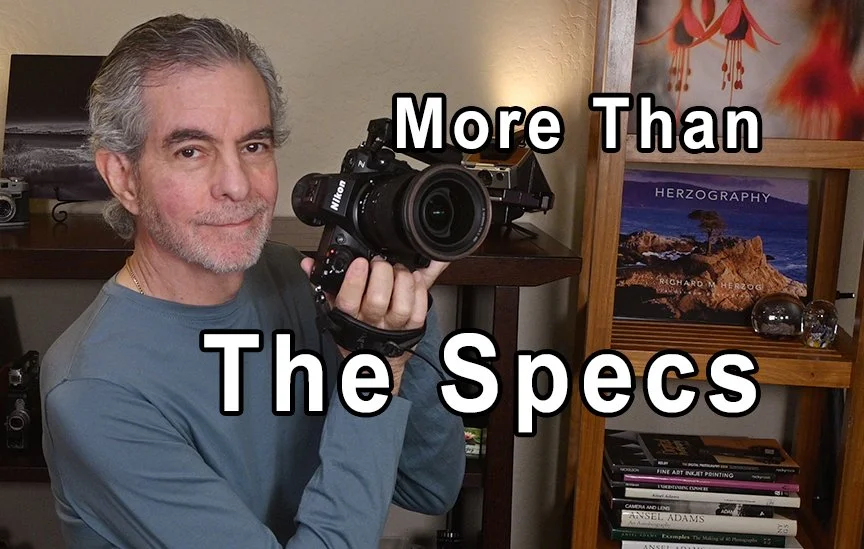
After all the new releases and camera hype out there, I still keep coming back to my Nikon Z8. From ergonomics and intuitive menus to full-frame performance and long exposure capability, it continues to be a reliable, enjoyable camera for my landscape and IR photography.
Why I Still Love My Nikon Z8: A Long-Term Review From the Field
The camera industry has a way of making photographers feel like they’re always one generation behind.
Every year there’s another announcement. Another flagship camera. Another list of “must-have” features that supposedly make everything before it obsolete.
It’s easy to get caught up in the excitement and start wondering if your current camera is suddenly holding you back.
But after spending a considerable amount of time with my Nikon Z8—photographing landscapes, creating long exposures, experimenting with infrared photography, and carrying it on countless outings—I keep coming back to the same conclusion.
I simply love using this camera.
Not because it’s the newest. Not because of impressive specifications on paper. And certainly not because someone paid me to say so.
I love it because, every time I pick it up, it quietly gets out of my way and lets me concentrate on making photographs.
That’s what a great camera should do.
A Camera That Feels Like an Extension of Your Hands
One of the first things I noticed about the Z8 wasn’t its sensor or autofocus.
It was how naturally it fit in my hands.
Ergonomics don’t often make headlines, but after spending hours hiking to a location or standing behind a tripod waiting for the light to come together, they’re every bit as important as image quality.
The grip is substantial without feeling oversized. Even with larger lenses mounted, the camera remains well balanced and comfortable to carry. The buttons are exactly where I expect them to be, and after a while they become second nature.
Eventually, you stop thinking about operating the camera.
You simply start creating.
That’s something I’ve always appreciated about Nikon cameras, and the Z8 continues that tradition beautifully.
Menus That Work With You, Not Against You
Let’s be honest.
Nobody buys a camera because they love scrolling through menus.
But when the light is changing by the second or a dramatic cloud formation suddenly appears, a well-designed menu system becomes incredibly important.
One of the reasons I’ve always enjoyed Nikon cameras is that the menus simply make sense.
Settings are grouped logically. The terminology is clear. Nothing feels buried behind endless layers of confusing options. And Nikon’s customizable My Menu allows me to place the settings I use most often exactly where I want them.
It may not sound exciting, but in the field it makes a real difference.
Instead of hunting for settings, I’m spending my time watching the light.
The Feature You Don’t Appreciate Until It’s Gone
Some camera features don’t seem important until you no longer have them.
For me, that’s the top LCD display.
At a quick glance, I can check my shutter speed, aperture, ISO, battery level, and shooting mode without turning on the rear screen or lifting the camera to my eye.
It’s especially useful when working on a tripod, photographing at night, or creating long exposures in low light.
It’s one of those small conveniences that quietly improves the shooting experience every single time you head into the field.
A Full-Frame Sensor That Continues to Impress
The heart of the Z8 is its outstanding full-frame sensor.
It’s the reason I trust this camera when conditions become challenging.
The files offer exceptional dynamic range, allowing me to recover shadow detail while maintaining beautiful highlight transitions. High ISO performance remains remarkably clean, and the tonal gradation gives images a natural look that holds up exceptionally well during post-processing.
Whether I’m photographing dramatic landscapes, architectural details, or scenes with extreme contrast, I know the files will give me plenty of flexibility once I get home.
That confidence is worth a lot.
A Pleasant Surprise for Infrared Photography
Infrared photography has become one of my favorite creative outlets, and not every camera system handles it equally well.
One challenge infrared photographers often encounter is lens hotspotting, where bright areas appear in the center of an image due to lens coatings.
Fortunately, I’ve found Nikon’s growing collection of Z-mount lenses—and even several adapted F-mount lenses—to perform exceptionally well for infrared work.
Minimal hotspots, strong contrast, and consistently clean rendering have made the Z8 an excellent platform for exploring infrared photography without needing a collection of specialized lenses.
It’s one more reason this camera continues to surprise me.
Long Exposures Without the Extra Hassle
As someone who enjoys photographing moving water, clouds, and minimalist landscapes, one feature has become indispensable.
The Z8 allows shutter speeds of up to fifteen minutes without switching into Bulb mode.
That may sound like a small feature, but in practice it’s incredibly convenient.
Many long exposures can be captured without a remote release, reducing vibration while simplifying my entire workflow. It also means carrying fewer accessories into the field.
Sometimes it’s the small improvements that make photography more enjoyable.
This is definitely one of them.
A Simple Feature That Protects Your Sensor
Landscape photography isn’t always kind to camera equipment.
Dust, blowing sand, pollen, salt spray, and wind are simply part of the job.
That’s why I’ve come to appreciate the Z8’s built-in sensor shield.
Every time I change lenses, there’s an added layer of protection helping keep debris away from the sensor.
It doesn’t eliminate sensor cleaning altogether, but it certainly reduces how often I need to do it—and that’s something every outdoor photographer can appreciate.
A Camera System That Keeps Getting Better
A camera body is only part of the equation.
The real strength of any system lies in its lenses.
Nikon’s Z-mount lineup has grown into one of the strongest mirrorless systems available today, offering everything from compact prime lenses to professional telephoto zooms and outstanding macro lenses.
Even better, third-party manufacturers continue expanding the ecosystem, giving photographers more choices and often more affordable options.
And for those of us with legacy F-mount glass, Nikon’s adapter makes it easy to continue using lenses we’ve trusted for years.
It’s exciting to see the system continue to mature.
One of Nikon’s Greatest Strengths: Firmware Updates
One of the things I admire most about Nikon isn’t found in the hardware.
It’s found in the way they continue supporting it.
Too often, camera manufacturers reserve meaningful improvements for the next camera body, encouraging photographers to upgrade every couple of years.
Nikon has taken a different approach.
Their firmware updates have consistently introduced meaningful improvements—better autofocus performance, expanded subject detection, workflow refinements, new shooting capabilities, and compatibility enhancements.
These aren’t just bug fixes.
They genuinely improve the camera.
Every major firmware update feels like receiving a refreshed version of the camera I already own, extending its capabilities without asking me to purchase another body.
That’s a philosophy I greatly appreciate.
Built for the Long Haul
Another benefit of investing in an established system is knowing that accessories will continue to be available.
Whether it’s batteries, memory cards, filters, cages, mounting plates, remote releases, or replacement accessories, the support network around the Z8 is extensive.
That kind of long-term reliability matters.
When you invest in a camera system, you’re investing in an entire ecosystem—not just a single camera body.
A Camera I Still Look Forward to Using
Long after the excitement of a new purchase fades, the Nikon Z8 continues to remind me why I chose it in the first place.
It’s comfortable to carry.
It’s intuitive to operate.
It produces exceptional image quality.
It excels at the kinds of photography I enjoy most, from landscapes and long exposures to infrared work and everyday shooting.
Most importantly, it encourages me to get outside and make photographs.
At the end of the day, that’s the highest compliment I can give any camera.
The Nikon Z8 doesn’t ask for my loyalty through clever marketing or flashy specifications.
It earns it every time I head into the field.
And that’s why, even after all this time, I still love shooting with it.