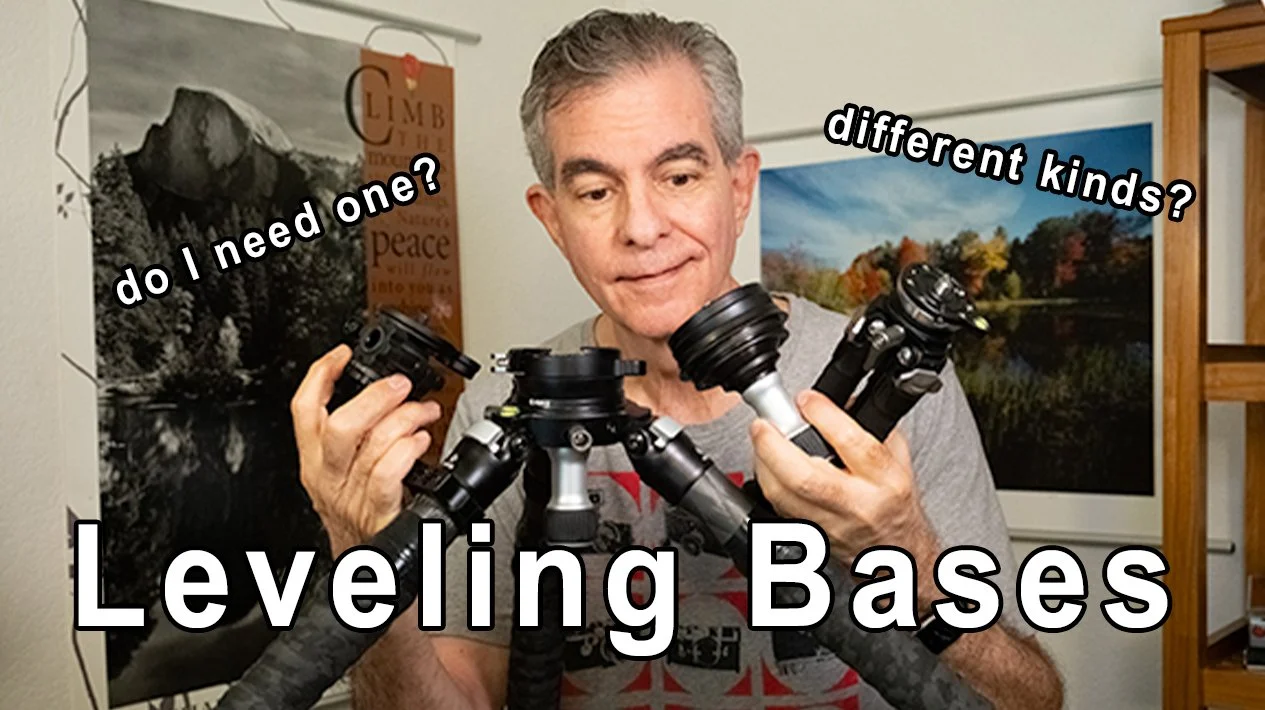
What Is a Tripod Leveling Base? Do You Really Need One?
If you’ve spent any amount of time photographing landscapes, wildlife, or panoramas, you’ve probably found yourself making endless adjustments to your tripod legs just to get everything level. You extend one leg, shorten another, check the bubble level, realize it’s still off, make another adjustment, and repeat the process. It can quickly become frustrating, especially when the light is changing rapidly.
That’s exactly where a tripod leveling base comes in.
Although it’s one of the most overlooked accessories in photography, a leveling base can dramatically improve both the speed and accuracy of your tripod setup. Once you begin using one, it’s difficult to imagine going back to adjusting tripod legs every time you move to a new composition.
What Is a Leveling Base?
A leveling base is an accessory that sits between your tripod and your tripod head. Rather than relying on the tripod legs to achieve a perfectly level platform, the leveling base allows you to make fine adjustments with a simple movement of the head itself.
Most leveling bases offer approximately 10 to 15 degrees of adjustment in every direction. By loosening a single locking knob or lever, you can tilt the platform until it’s perfectly level, then lock it firmly into place in just a few seconds.
Many models include a built-in spirit level, making it easy to verify that everything is level before you begin shooting. Others, like the Really Right Stuff leveling base that I use, mount directly into the tripod’s apex and are tightened by gripping the underside of the mechanism instead of using an external locking knob.
The movement is smooth, quick, and precise, allowing you to level your camera regardless of how much equipment is mounted on top.
Why Use a Leveling Base?
The biggest advantage is speed.
Instead of constantly adjusting tripod legs every time the terrain changes, you simply spread the legs so the tripod is reasonably stable and then use the leveling base to make the final adjustment. Whether you’re standing on rocks, uneven dirt trails, or a sloping hillside, getting perfectly level only takes a few seconds.
This becomes especially valuable when photographing at sunrise or sunset, where every minute—and sometimes every second—counts.
Beyond speed, a leveling base also improves accuracy. Because the adjustment is made directly beneath the tripod head, it’s much easier to achieve an exact level than it is by making small changes to individual tripod legs.
That precision is particularly important when photographing panoramas. If your tripod isn’t level, the camera’s rotation will slowly drift upward or downward as you pan across the scene. While panorama software has become incredibly capable, starting with a properly leveled setup results in cleaner image alignment, less cropping, and an overall easier stitching process.
Another benefit is versatility.
A leveling base works exceptionally well with a variety of tripod heads, including:
Ball heads
Fluid heads
Gear heads
Gimbal heads
Panoramic heads
In fact, if you’re using a gimbal head for wildlife or sports photography, you can often mount the gimbal directly onto the leveling base. This creates a very stable platform while allowing you to quickly level the entire system before tracking moving subjects.
The Different Types of Leveling Bases
Not all leveling bases are designed the same. There are several styles available, and the best choice depends on your tripod and the way you work.
Built-In Leveling Bases
Many premium tripod manufacturers now offer tripods with integrated leveling bases. These are built directly into the tripod and typically provide around 10 degrees of movement.
The biggest advantage is convenience. There’s nothing additional to install, and everything remains compact and streamlined.
If you’re purchasing a new tripod specifically for landscape photography or video work, this can be an excellent option.
Screw-On Leveling Bases
Another common style screws directly onto the tripod using the standard 3/8-inch mounting stud located at the top of the tripod.
This makes them compatible with almost any tripod on the market.
Installation is simple, and if you own multiple tripods, you can easily move the leveling base from one tripod to another.
Apex-Mounted Leveling Bases
Some tripods feature a removable apex plate, allowing the entire center section to be replaced with a leveling base.
This is the style I use on my primary landscape tripod.
Rather than sitting on top of the tripod, the leveling base actually becomes part of the tripod itself. The result is a lower center of gravity, a cleaner design, and an incredibly rigid platform.
The only tradeoff is that replacing the apex plate usually means giving up the center hook located underneath the tripod.
Why I Chose an Apex-Mounted Design
When I installed my leveling base, I knew I would lose the hook that normally hangs beneath the tripod.
Some photographers use that hook to suspend a camera bag or backpack, adding extra weight to increase stability in windy conditions.
There are leveling bases that include replacement hooks, but I intentionally chose one without a hook.
For my style of photography, I’d rather eliminate any possibility of vibration caused by a bag swinging beneath the tripod. Even slight movement from wind can introduce unwanted vibrations during long exposures, and I’d rather keep the entire system as rigid as possible.
Instead, if conditions are particularly windy, I prefer using other techniques to stabilize the tripod rather than hanging additional weight from it.
Arca-Swiss Clamp or Direct Mount?
One of the decisions you’ll face when purchasing a leveling base is whether to choose a model with a built-in Arca-Swiss clamp or one that mounts directly using a threaded connection.
Each design has its advantages.
A leveling base with an Arca-Swiss clamp makes changing tripod heads incredibly fast. If you regularly switch between a ball head, a panoramic head, a fluid head, and a gimbal, you simply unlock the clamp, remove one head, and attach another within seconds.
The only requirement is that each tripod head needs to have an Arca-Swiss compatible plate attached.
If you’re someone who frequently changes equipment depending on the type of photography you’re doing, this can significantly speed up your workflow.
The alternative is mounting each head directly using the standard 3/8-inch threaded connection.
This creates a very secure connection, but changing heads takes longer since you’ll need to unscrew one head before attaching another.
For example, my Really Right Stuff gimbal includes an integrated Arca-Swiss interface but also has a 1/4-20 threaded mounting hole. If I wanted to mount it directly using a 3/8-inch stud, I would need an adapter to convert between the two thread sizes.
It’s not difficult, but it’s an extra step—and another small accessory to keep track of.
Is a Leveling Base Worth It?
If your photography mostly consists of casual snapshots taken from relatively flat ground, a leveling base may not be necessary.
However, if you regularly photograph landscapes, panoramas, architecture, wildlife, or shoot video using a tripod, a leveling base can quickly become one of your favorite accessories.
It speeds up setup, improves precision, reduces frustration, and allows you to spend more time concentrating on composition rather than constantly adjusting tripod legs.
For me, it’s become a permanent part of my tripod system. Whether I’m setting up for a panoramic image, using a fluid head for video, mounting a gimbal for wildlife, or simply attaching a traditional ball head, having a perfectly level platform takes only a few seconds.
Sometimes the smallest accessories make the biggest difference in the field. A leveling base may not be the most exciting piece of gear you’ll ever purchase, but once you’ve experienced how much faster and easier it makes your workflow, you’ll probably wonder how you managed without one.