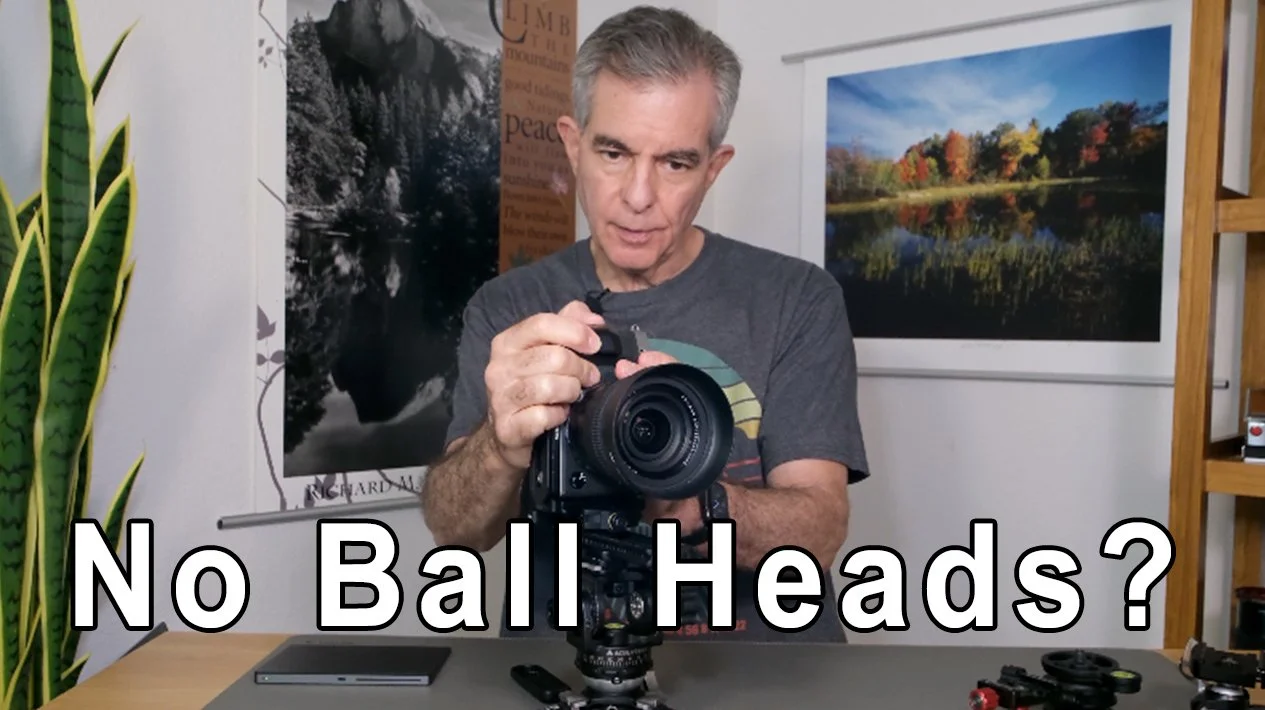
Why I Switched From a Ball Head to a Panning Head for Landscape Photography
In landscape photography, the smallest decisions in the field often have the biggest impact on the final image—especially when it comes to how your camera is supported and positioned. For years, I relied on a traditional ball head as my primary support system. Like many photographers, it felt like the most flexible and universal option.
But over time, especially when shooting panoramic landscapes and structured subjects like architecture and pianos, I kept running into the same problem: inconsistency.
That inconsistency eventually led me to make a change I didn’t expect—I moved away from a ball head system and switched to a dedicated panning head setup. In my case, I now use an Acratech panning head, and it has completely changed the way I approach landscape and panorama work.
The Hidden Problem With Ball Heads in Panorama Work
On the surface, a ball head seems like the perfect all-purpose solution. It’s compact, versatile, and widely used in landscape photography. But the issue isn’t flexibility—it’s precision.
When shooting panoramas, especially stitched images, the accuracy of your rotation becomes critical. With a ball head, the camera is leveled and then rotated from the top of the ball itself—not from a true panoramic axis.
This creates a subtle but important problem: the camera is not rotating around its ideal nodal alignment.
Even small errors introduce:
Uneven horizons between frames
Parallax issues between foreground and background
Stitching errors in post-processing software
Warping or distortion in panoramic blends
What looks perfectly fine in the field can turn into frustration once you start stitching images together.
Why Structured Subjects Like Pianos Make It Worse
This issue becomes even more obvious when photographing structured or linear subjects such as pianos, architectural details, or any scene with strong horizontal and vertical lines.
These subjects demand precision. Straight lines must stay straight, and overlap between frames has to be exact.
With a ball head, even a slight off-axis rotation means:
Your stitching software is forced to correct problems that should never have existed in the capture stage.
The result is more time in post—and less consistency in the final image.
My Previous “Best of Both Worlds” Setup: The RRS BH-55 with Panning Clamp
Before switching to a panning head system, I tried to solve this problem using a different approach.
I used the Really Right Stuff BH-55 ball head with a panning clamp mounted on top.
This was actually a very solid hybrid solution. The BH-55 is extremely well-built, and adding a panning clamp gave me the ability to create controlled horizontal movement for panoramas while still using a ball head for general shooting.
For a while, it worked well.
However, there was one major drawback: weight.
The BH-55 system with a panning clamp is incredibly heavy. After long days in the field, especially during landscape sessions where I’m carrying gear over distance or working on uneven terrain, that extra weight became more and more noticeable.
At a certain point, the trade-off between capability and portability stopped making sense for my workflow.
Switching to a Dedicated Panning Head System - Acratech Panoramic Head
That frustration eventually led me to simplify my setup and move to a dedicated panning head system.
The Acratech panning head is designed specifically for controlled, precise rotation. Unlike a ball head, it allows the camera to remain level while rotating cleanly around a fixed horizontal axis.
This makes a major difference when shooting:
Panoramic landscapes
Wide stitched compositions
Architectural scenes
Multi-frame image sequences
Instead of compensating for mechanical inconsistencies, the system is now doing exactly what it’s supposed to do—provide accurate, repeatable movement.
What Changes in the Field
The difference becomes obvious immediately.
With a panning head:
Horizons stay consistent across frames
Foreground and background alignment improves dramatically
Stitching becomes faster and more reliable
There is far less correction needed in post-processing
Most importantly, the shooting process becomes more intentional. You’re no longer fighting the gear—you’re simply using it.
That shift frees up more attention for composition, light, and timing.
Why This Matters for Landscape Photographers
A ball head still has its place in photography. It’s fast, versatile, and useful for general shooting situations.
But when precision matters—especially in panoramas and structured landscape compositions—it can introduce subtle errors that compound later in post-processing.
My experience moving from a heavy BH-55 ball head system with a panning clamp to a dedicated panning head wasn’t about chasing new gear. It was about removing friction from the creative process.
And in landscape photography, anything that reduces friction and increases consistency is worth serious consideration.
Final Thoughts
Over time, I’ve learned that the best gear decisions are rarely about specs—they’re about workflow.
The shift to a dedicated panning system didn’t just improve my images. It simplified how I work in the field.
Sometimes the most important upgrade you can make isn’t a new camera or lens—it’s the system that holds everything steady while you create.