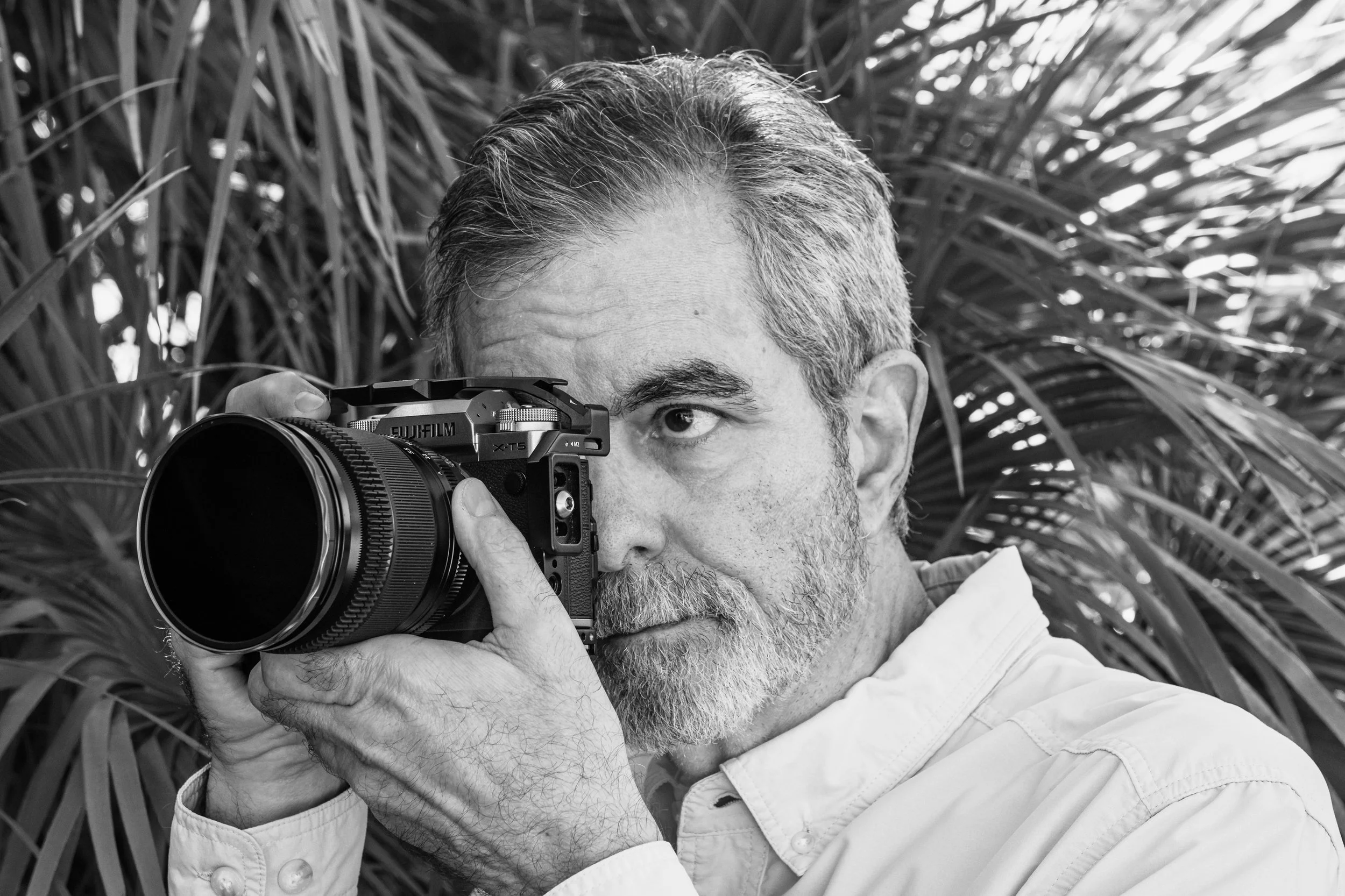
“Smartphones didn’t replace photographers. They revealed who was actually making photographs.”
The Smartphone Revolution: It’s Not About Cameras Anymore
Let me begin by clearing up a common misconception.
I’m not anti-camera.
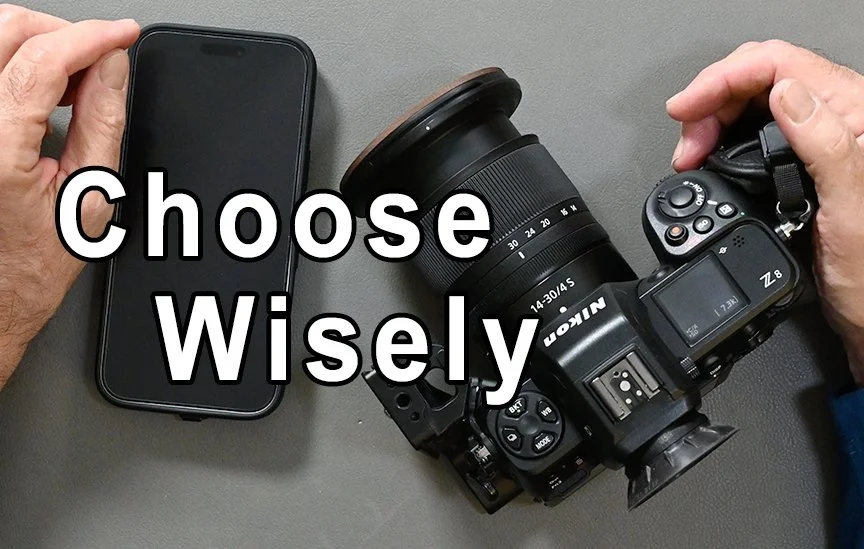
I shoot professionally—and for my own enjoyment—with a Nikon Z8. When I use the Z8, the files are extraordinary. I can push the ISO, recover deep shadows, and produce images that remain clean enough for large-format prints. It’s an incredible photographic tool and one I rely on whenever ultimate image quality is the goal.
But I also photograph extensively with my iPhone 17 Pro.
Some of my favorite images—the ones that connect most with people—aren’t technically perfect. They weren’t made with the highest dynamic range or the sharpest lens. They simply captured a moment that mattered.
I’ve never viewed my Nikon and my iPhone as competing tools. Instead, I see them as specialists, each designed for different situations.
There are moments when the mood matters more than absolute clarity. Moments when pulling out a large camera would interrupt the scene. Moments when instinct is more important than camera settings.
In those situations, I’m perfectly willing to accept a little image noise if it means preserving the experience. After all, vision doesn’t live at 100 percent magnification.
Photography Has Already Changed
The truth is, smartphone photography isn’t just improving—it is fundamentally changing photography itself.
Not sometime in the future.
Right now.
The way photographs are captured, edited, shared, and even judged has been transformed by the device nearly all of us carry in our pockets. Whether you photograph with a smartphone, a mirrorless camera, or both, this shift affects how your work is viewed and appreciated.
What’s interesting is that we’ve experienced this kind of transition before.
When digital cameras began replacing film, photographers worried about declining quality. They feared photography was becoming too easy and that traditional craftsmanship would disappear.
Of course, none of that happened.
Digital photography didn’t destroy photography. It simply changed the process. It changed how images were created, processed, and shared.
Today we’re witnessing the same evolution once again.
Only this time, the catalyst isn’t digital cameras.
It’s smartphones.
The Revolution Isn’t About Image Quality
This transformation goes far beyond sensors and megapixels.
Many of today’s most-viewed photographs and videos weren’t created with expensive cameras. They were captured on smartphones, often under difficult lighting conditions and by people with little or no formal photographic training.
So perhaps the real question isn’t whether smartphones are “good enough.”
A better question is this:
What exactly are smartphones changing—and why does it matter?
Photography once required significant investment. You needed a camera body, lenses, editing software, a computer, and the time to master exposure, composition, and post-processing. Those barriers naturally limited who could participate.
Today, most of those barriers have disappeared.
Anyone carrying a smartphone can instantly document their lives, their communities, and their unique perspective. We see protests from inside the action, authentic travel experiences instead of staged postcards, and everyday family moments becoming part of our shared visual history.
Smartphones didn’t lower photographic standards.
They expanded the conversation.
Where the Real Innovation Happens
Ironically, the biggest technological breakthrough isn’t the camera itself.
It’s everything that happens after you press the shutter.
Modern smartphones automatically blend multiple exposures, intelligently reduce noise, recognize faces, balance highlights and shadows, selectively sharpen details, and correct lens distortions—all within seconds.
Many of these techniques once required advanced editing skills and specialized software.
Now they’re automatic.
This has shifted photography in an important way.
Vision has become more valuable than technical perfection.
For decades photographers debated grain, ISO performance, sharpness, and dynamic range. Those subjects certainly matter, but only to a point.
Most people now view photographs on phones and tablets. They scroll quickly. They respond emotionally. They don’t zoom into every corner searching for digital noise.
They respond to what the image communicates.
Vision means recognizing what belongs inside the frame—and what doesn’t. It means choosing the decisive moment rather than the technically perfect one. It means understanding light, color, composition, and developing a recognizable way of seeing.
A slightly noisy photograph with genuine vision feels alive.
A technically flawless image without purpose feels empty.
Noise is a technical problem.
Vision is a creative one.
And viewers forgive technical imperfections far more readily than they forgive boring photographs.
Photography Has Become a Conversation
Editing has evolved just as dramatically.
It was once a separate stage that happened hours—or days—after the photograph was taken. Today it’s integrated directly into the capture process.
We preview the final look before pressing the shutter. We edit RAW files on our phones, straighten horizons, remove distractions, adjust color, and publish images within moments.
Photography used to be a slow, reflective process.
Now it’s conversational.
Images are no longer simply finished works—they’re part of an ongoing dialogue.
This shift also explains why story has become more important than specifications.
Photography culture has spent years debating megapixels, dynamic range charts, autofocus performance, and lens sharpness comparisons.
Most viewers don’t care about those numbers.
They care about the story.
Every memorable photograph answers at least one important question.
Who is this about?
What’s happening?
Why does it matter?
How does it make me feel?
Camera specifications help create photographs.
Story is what makes people remember them.
What Still Separates Great Photographers
This new reality has made some photographers uncomfortable.
As smartphones increasingly handle exposure, focus, white balance, and color processing automatically, technical mastery is no longer the primary advantage it once was.
But perhaps that’s exactly the point.
What continues to separate strong photographers isn’t the equipment.
It’s composition.
It’s light.
It’s timing.
It’s subject selection.
It’s consistency of vision.
Smartphones didn’t replace photographers.
They simply revealed what has always mattered most.
And that brings us to something even more important:
Intent.
Intent is the difference between taking a photograph and making one.
Traditional cameras naturally encouraged intention because every image required effort. Smartphones removed much of that friction, making photography almost effortless.
Today, intention has to be deliberate.
Why are you making this image?
Where will it be seen?
How should it be framed?
What deserves to be included—and just as importantly, what should be left out?
A thoughtfully made smartphone photograph will almost always be more compelling than an expensive camera image captured on autopilot.
The Future Isn’t Phone vs. Camera
Perhaps we’ve been asking the wrong question all along.
This has never been a battle between smartphones and cameras.
It’s simply about choosing the right tool for the story you’re trying to tell.
Dedicated cameras excel when maximum creative control is required.
Smartphones excel when immediacy, accessibility, and spontaneity matter most.
The best photographers don’t argue about equipment.
They choose whatever tool best serves their vision.
Because the future of photography isn’t about phone versus camera.
It’s about vision versus noise.
Story versus specifications.
Intent versus equipment.
Photography is becoming more immediate.
More human.
More inclusive.
And that’s not the end of photography.
It’s simply the beginning of its next chapter.