Don’t Get Stuck With a Phone Case That Only Accepts Proprietary Filters
Don’t Get Stuck With a Phone Case That Only Accepts Proprietary Filters
If you’ve spent any time exploring mobile photography, you’ve probably noticed a growing trend: phone cases and filter systems that lock you into proprietary accessories. At first, it sounds convenient. Everything is designed to work together, installation is simple, and the marketing makes it feel like the perfect all-in-one solution.
But after the excitement wears off, many photographers discover the downside. What initially feels streamlined can quickly become restrictive — especially once your creative interests begin to evolve.
One of the biggest advantages of mobile photography has always been freedom. Your phone is lightweight, portable, and always with you. You can move from landscapes to street photography, cinematic video to macro detail shots, all without carrying a heavy bag of gear. Mobile photography thrives on adaptability.
Ironically, some accessory ecosystems work against that philosophy. Instead of expanding your creative options, they narrow them. You’re limited to one company’s filters, one mounting system, and one specific vision of how your setup should work. And for photographers who enjoy experimenting, that limitation becomes noticeable very quickly.
Creative styles change constantly. Some days you may want smooth cinematic motion using ND filters. Other times you may want the soft glow of diffusion filters, the contrast control of a CPL, or the ability to shoot detailed macro images. Photography is fluid, and your tools should be flexible enough to evolve with your ideas.
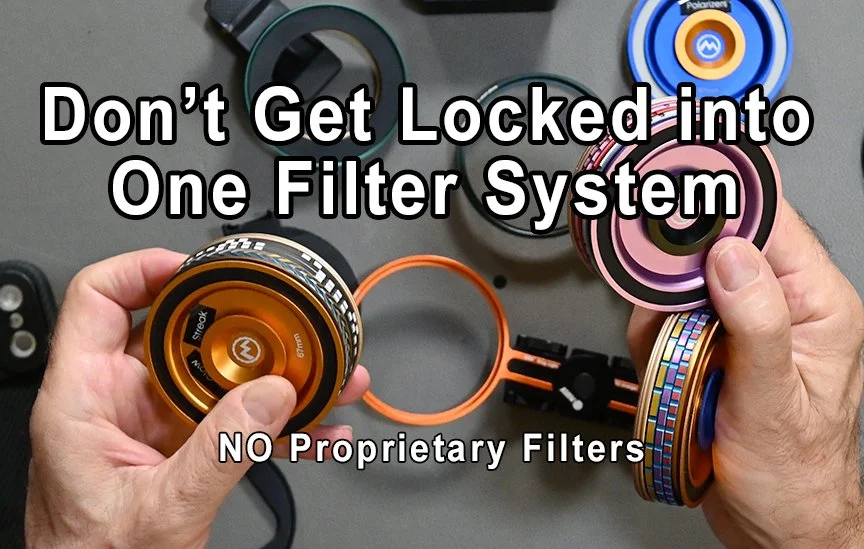
That’s one reason I’ve appreciated working with the Maven filter system. Rather than forcing you into a small proprietary ecosystem, it opens the door to a much wider range of creative possibilities. The ability to quickly switch between filters and shooting styles without rebuilding your entire setup changes the experience of shooting with a phone.
With Maven filters, you can move seamlessly between cinematic video, long exposures, diffusion effects, reflection control, and macro photography in a matter of seconds. That flexibility encourages experimentation, and experimentation is often where the best images come from.
Macro photography is one of the best examples of why adaptability matters. Using Maven’s magnetic close-up diopters, you can achieve dramatic magnification that approaches nearly 1:1 macro results — without needing a separate dedicated macro lens. That means you can transition from wide desert landscapes to intricate cactus textures, flowers, or abstract details almost instantly.
For mobile photographers, that kind of versatility matters in the field. Your setup stays lightweight, fast, and easy to use while still giving you professional-level creative options. Instead of carrying multiple specialty lenses or complicated accessories, you can adapt quickly as the scene changes around you.
There’s also the issue of longevity. Smartphones evolve every year. Camera layouts change. Lens placements move. Cases become outdated. When you invest heavily in a proprietary ecosystem, upgrading your phone can mean replacing nearly everything — your case, mounts, accessories, and sometimes even filters.
Over time, that becomes expensive and frustrating.
A more flexible filter system gives you room to adapt without constantly starting over. It’s not just about convenience in the moment; it’s about building a creative workflow that can grow with you long-term.
A lot of companies market simplicity, but simplicity without flexibility can become a creative dead end. As photographers, we should be building systems that encourage experimentation, not systems that quietly limit it. The ability to mix filters, try new looks, and adapt your setup to different styles of photography is one of the greatest strengths of mobile photography today.
Personally, I never want my phone case deciding what kind of photography I’m allowed to create.
So before buying your next mobile photography setup, it’s worth asking yourself one important question: do you want a closed ecosystem, or do you want creative freedom?
Because the right filter system doesn’t just protect your phone — it expands what your camera can become.